
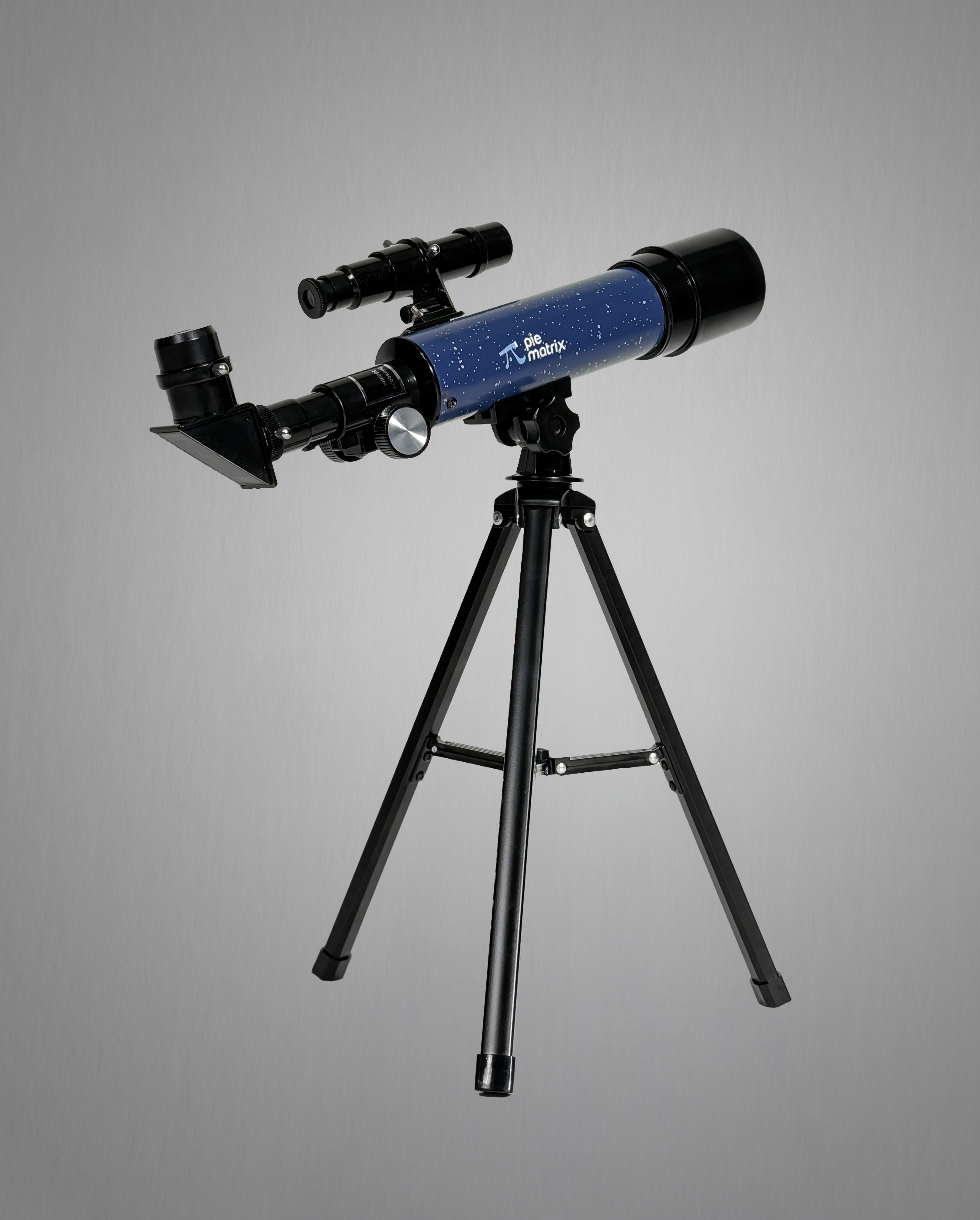
Have you ever pointed a telescope at Jupiter with your heart brimming with excitement, but all you see is a soft, wobbly blob instead of crisp bands and moons? Well, you aren’t alone because we have all been there when we tweaked the focus of the telescope or waited for the air to settle, but still, the results were not that impressive. That’s where a refractor telescope can prove quite life-changing. If you feel planetary viewing is brutally honest about your telescope’s strengths and weaknesses, it’s time you switch to a refractor telescope for all the right reasons.
The Secret Behind that Razor-Sharp View
Refractor telescopes use lenses instead of mirrors, so light enters the front lens and travels in a straight line to your eyepiece without bouncing or detours. This clean optical path is the first reason planets look so sharp, because when you are hunting for Saturn’s rings or Mars’ polar caps, that simplicity matters more than you think.
No Central Obstruction Means More Detail
Unlike reflector telescope, refractors don’t have a secondary mirror blocking incoming light. This means higher contrast right out of the box, and the best part about this is that planets thrive on contrast. For instance, if you want to observe the dark Cassini Division in Saturn’s rings or the subtle cloud belts on Jupiter, refractors make these details pop instead of washing them out.
Planetary Viewing Loves High Contrast
Let’s be honest here- planets aren’t faint fuzzies; they are rather bright, compact, and detail-rich celestial bodies. Refractor telescopes excel at helping you view planetary details because they deliver tight, pinpoint images with minimal light scatter. Stars stay stars, not tiny smudges; planetary edges look clean and well defined, and this makes refractors the go-to choice for lunar as well as planetary pursuits.
Minimal Maintenance, Maximum Fun
Here’s another underrated perk: refractors hold their alignment, so you don’t have to deal with the constant collimation rituals before every observing session. You set it up, let it cool, and you can observe your favorite astronomical bodies simply. We would say that for quick planetary sessions or casual stargazing nights, this ease is pure joy!
But What About Chromatic Aberration?
Yes, cheaper refractors can show a bit of color fringing. But modern ED and apochromatic refractors dramatically reduce this. The result is clean, natural-looking planetary colors without distracting halos.
Ready to Experience Sharper Planetary Views?
If you are serious about planetary viewing, it might be time to explore refractor telescopes more deeply. Pie Matrix brings clarity, guidance, and smart recommendations to help you choose the right telescope for your stargazing goals.
Want to buy a refractor telescope online but don’t know where to start? Our website is just a click away—explore smarter, observe sharper, and discover the universe with Pie Matrix. Contact us today to get expert guidance and find the perfect telescope for your needs.
Share:
Helix vs Draco: Which Telescope is Right for You?
Why Reflector Telescopes Are Better for Deep-Sky Observations