Buy Reflector Telescopes for Astronomy & Deep-Sky Views - Pie Matrix

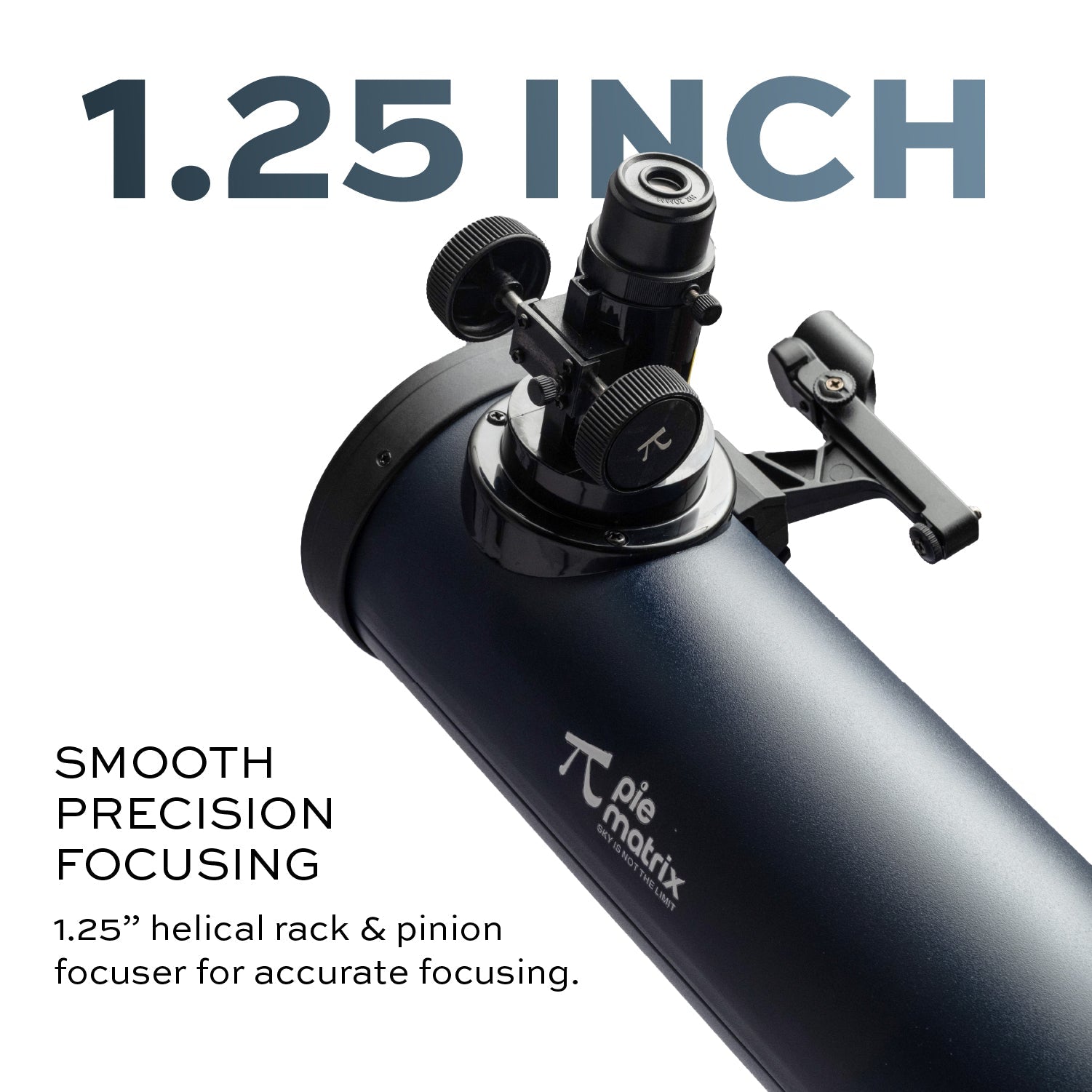
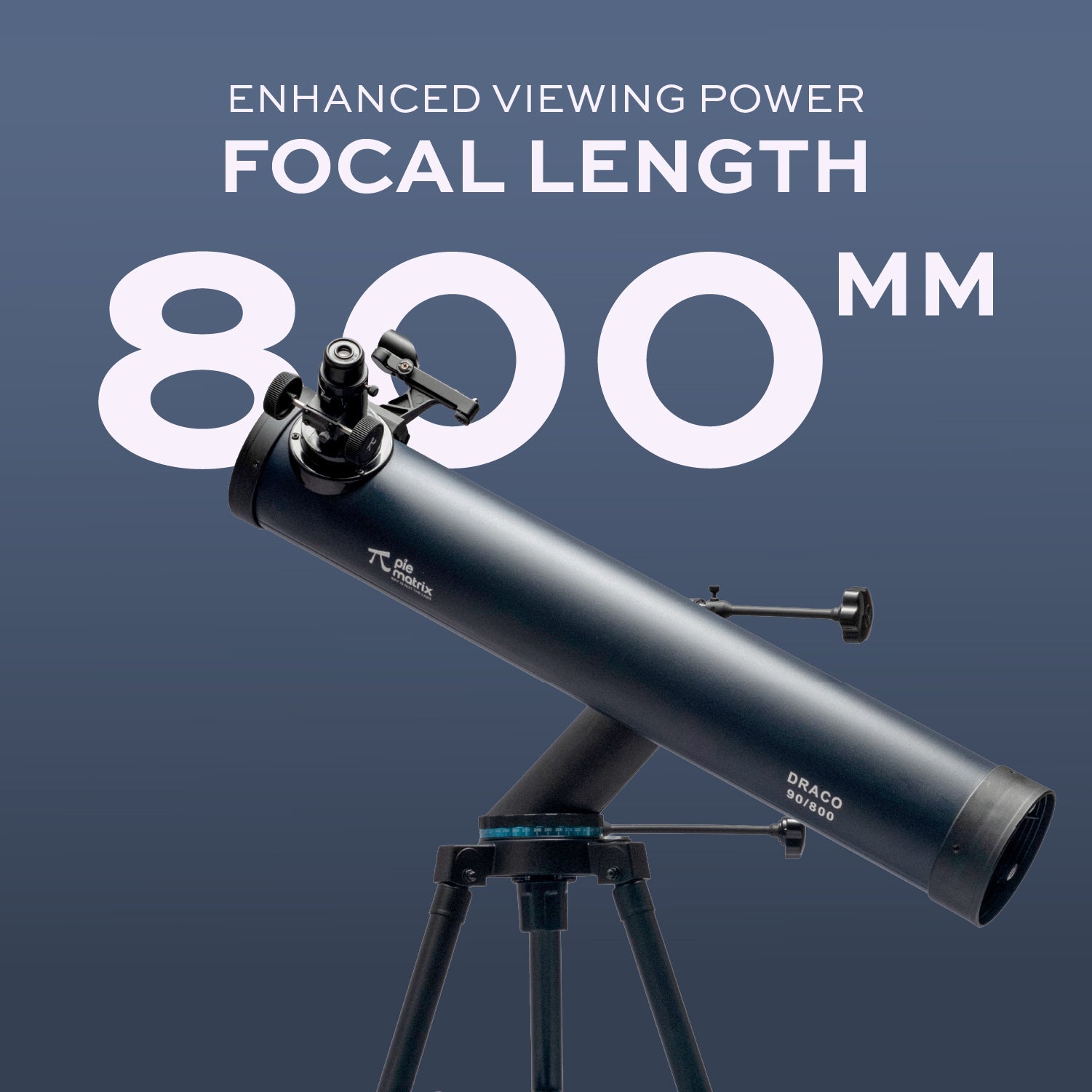
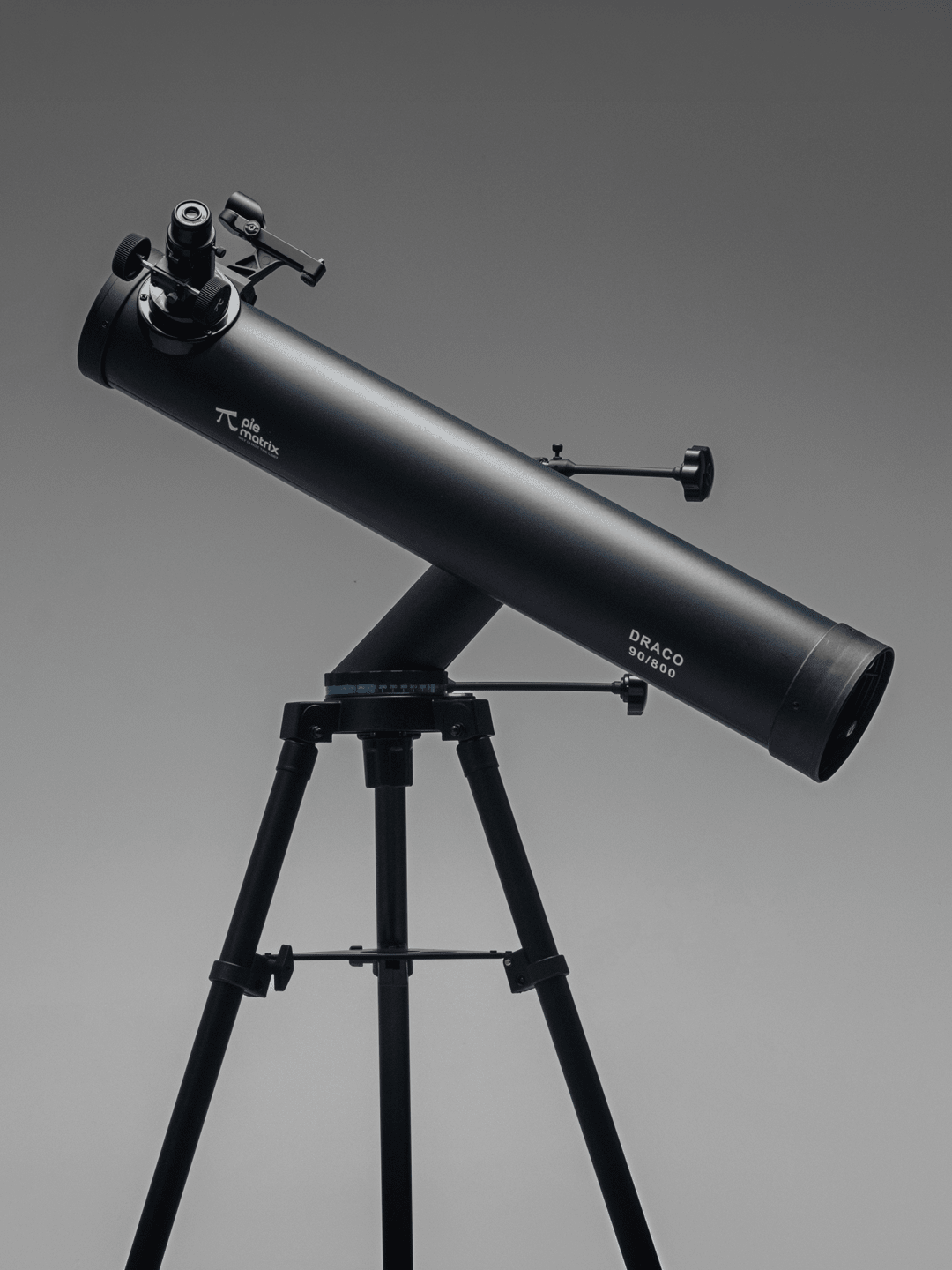
Draco 90/800 Reflector Telescope

Sale priceRs. 19,999.00Regular price Rs. 26,999.00

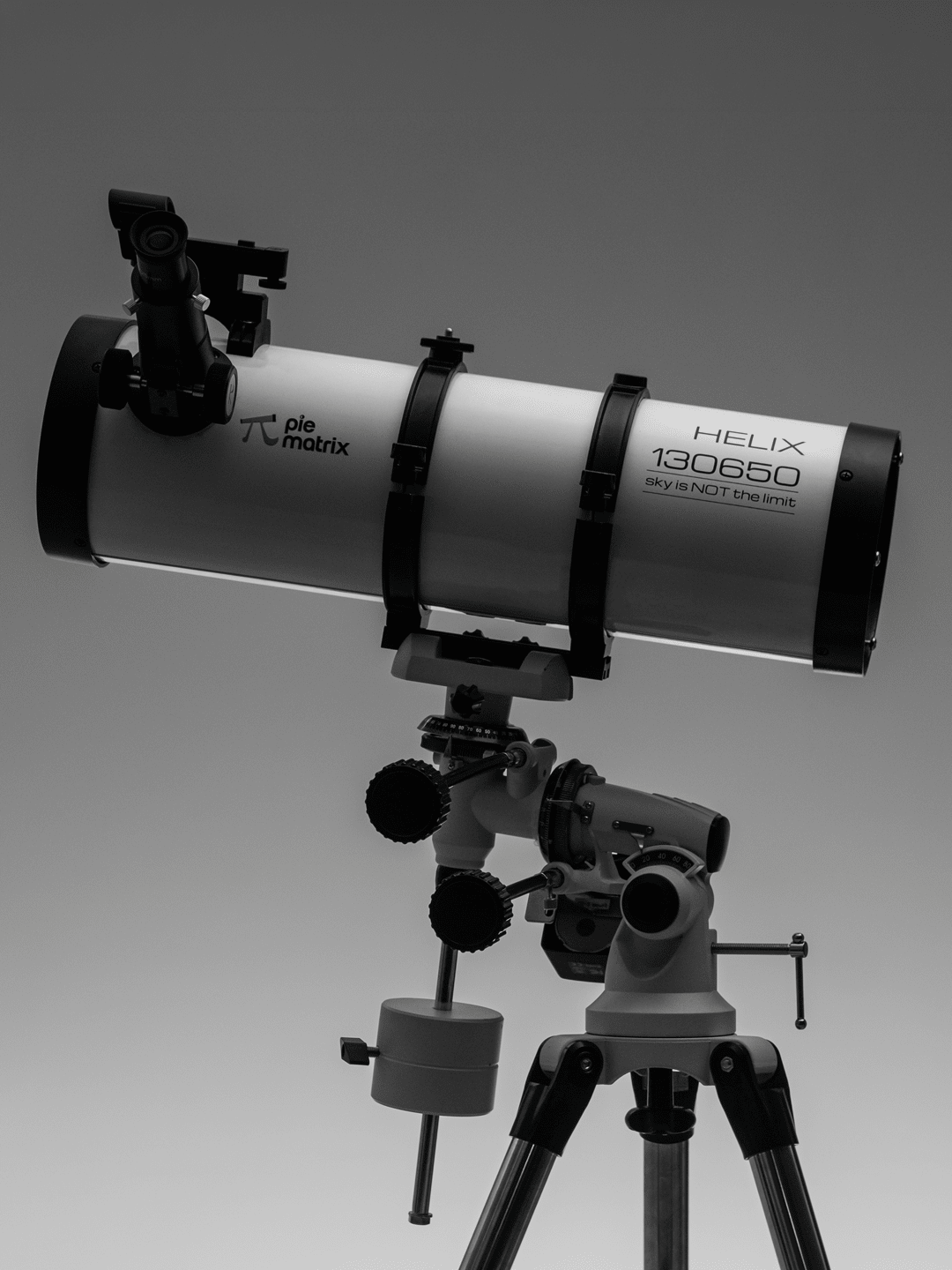
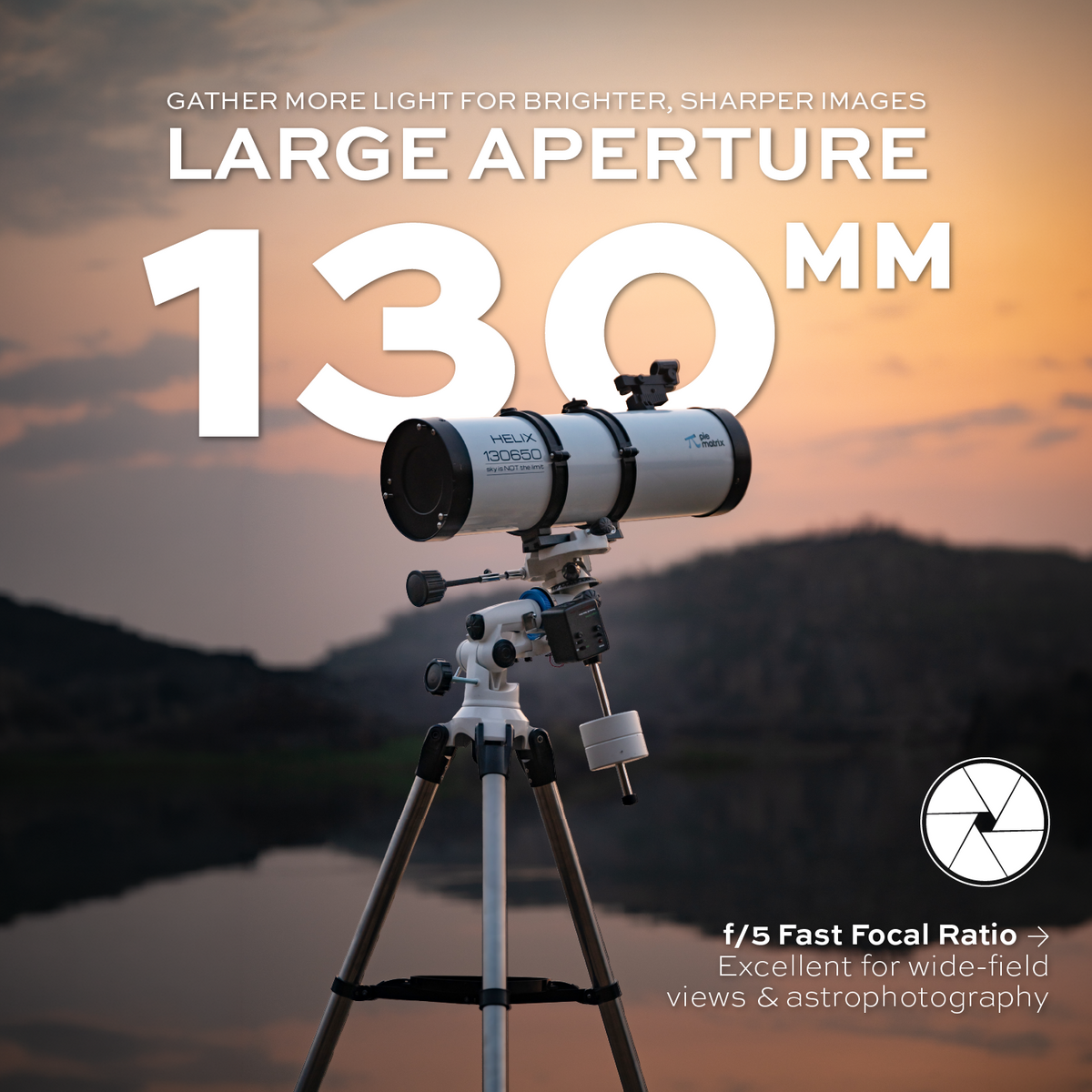
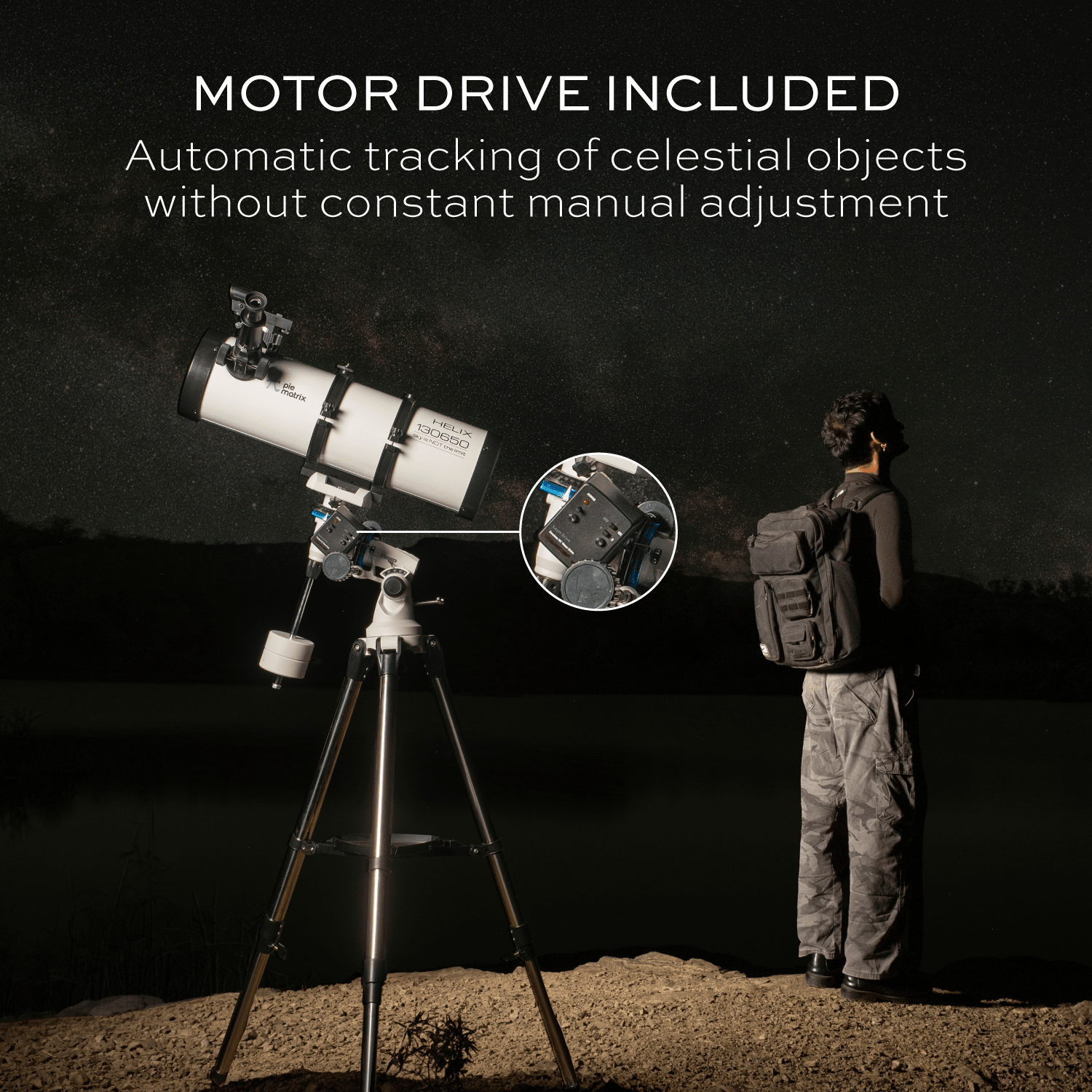
Helix Reflector Telescope with Motor Drive

Sale priceRs. 34,999.00Regular price Rs. 42,999.00

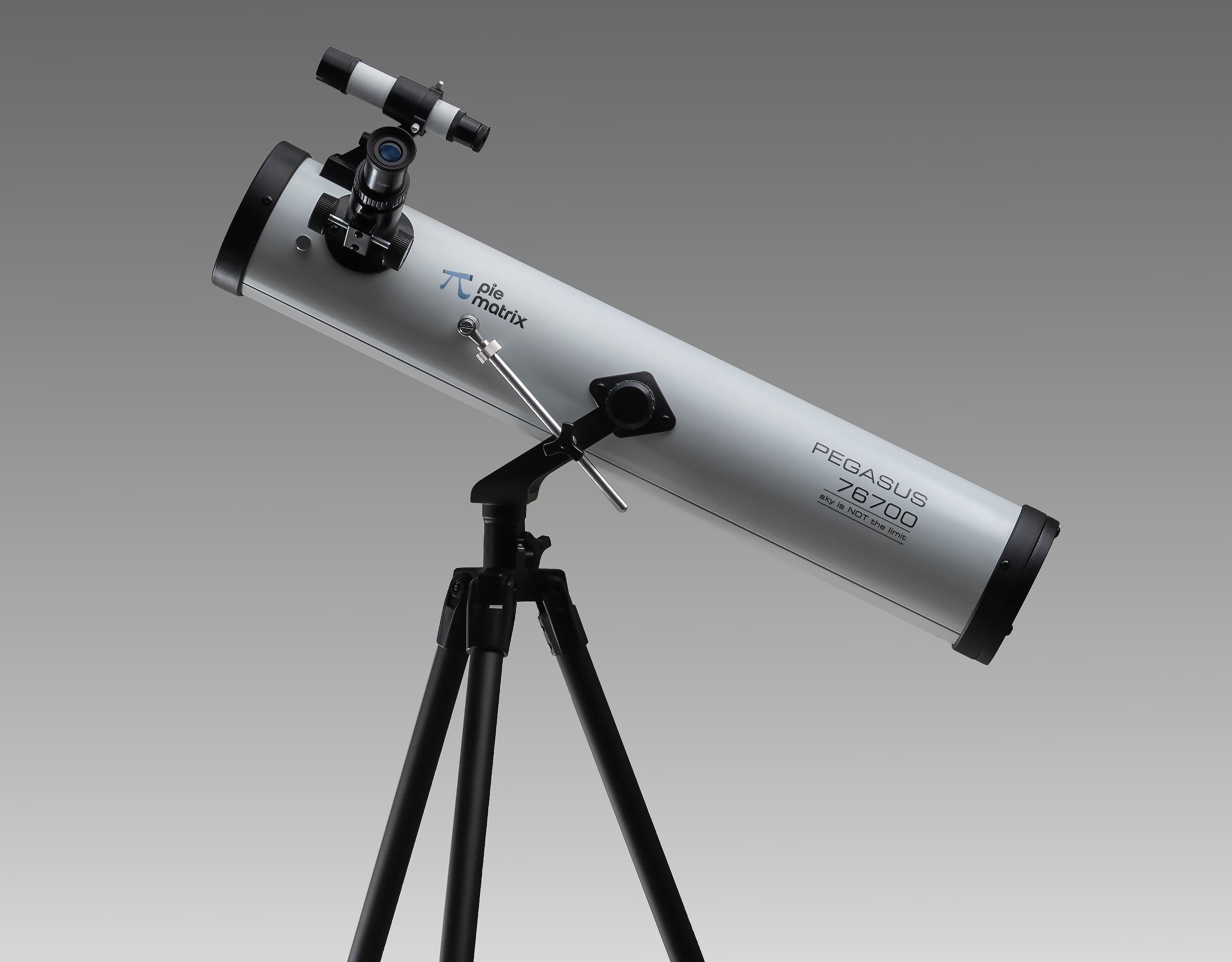
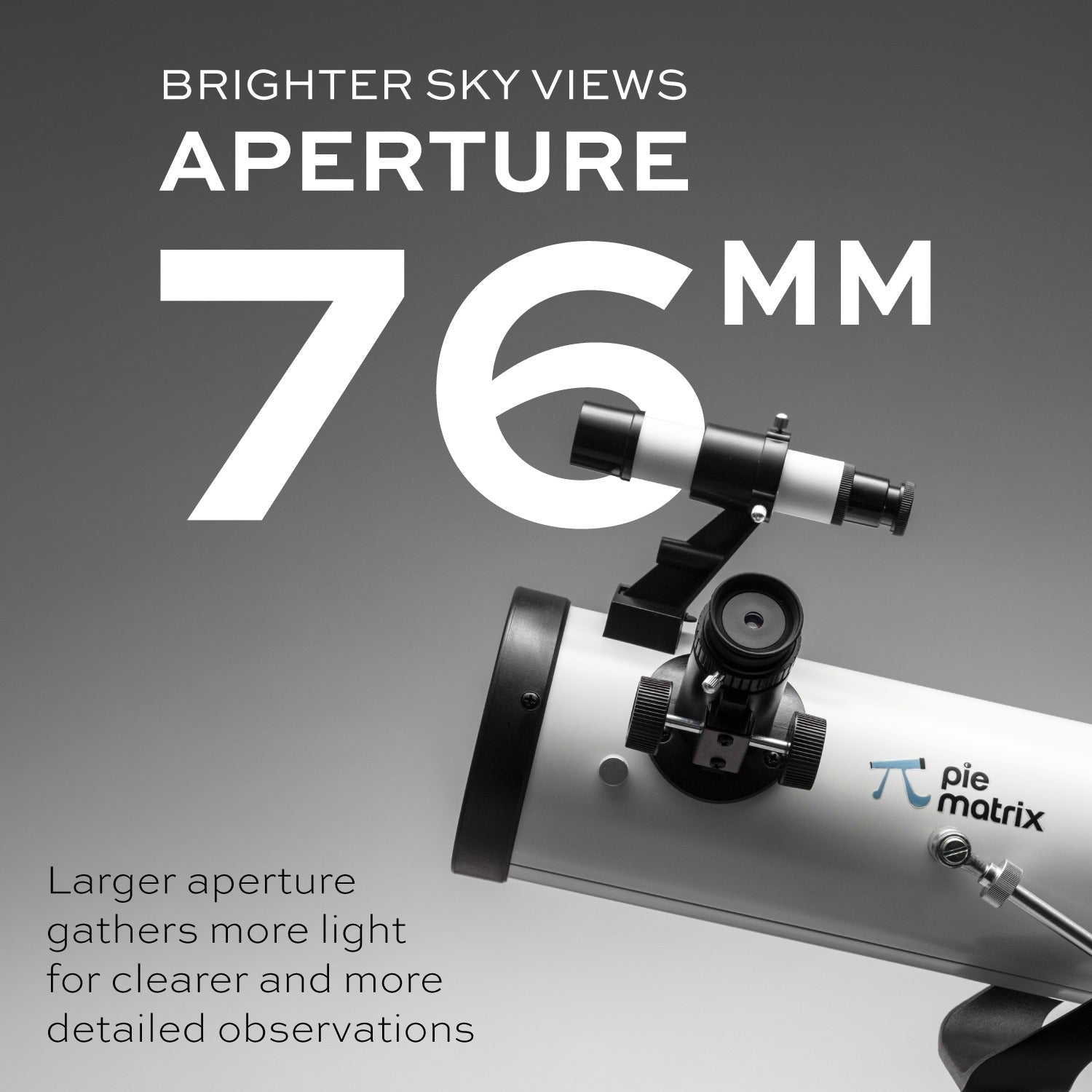
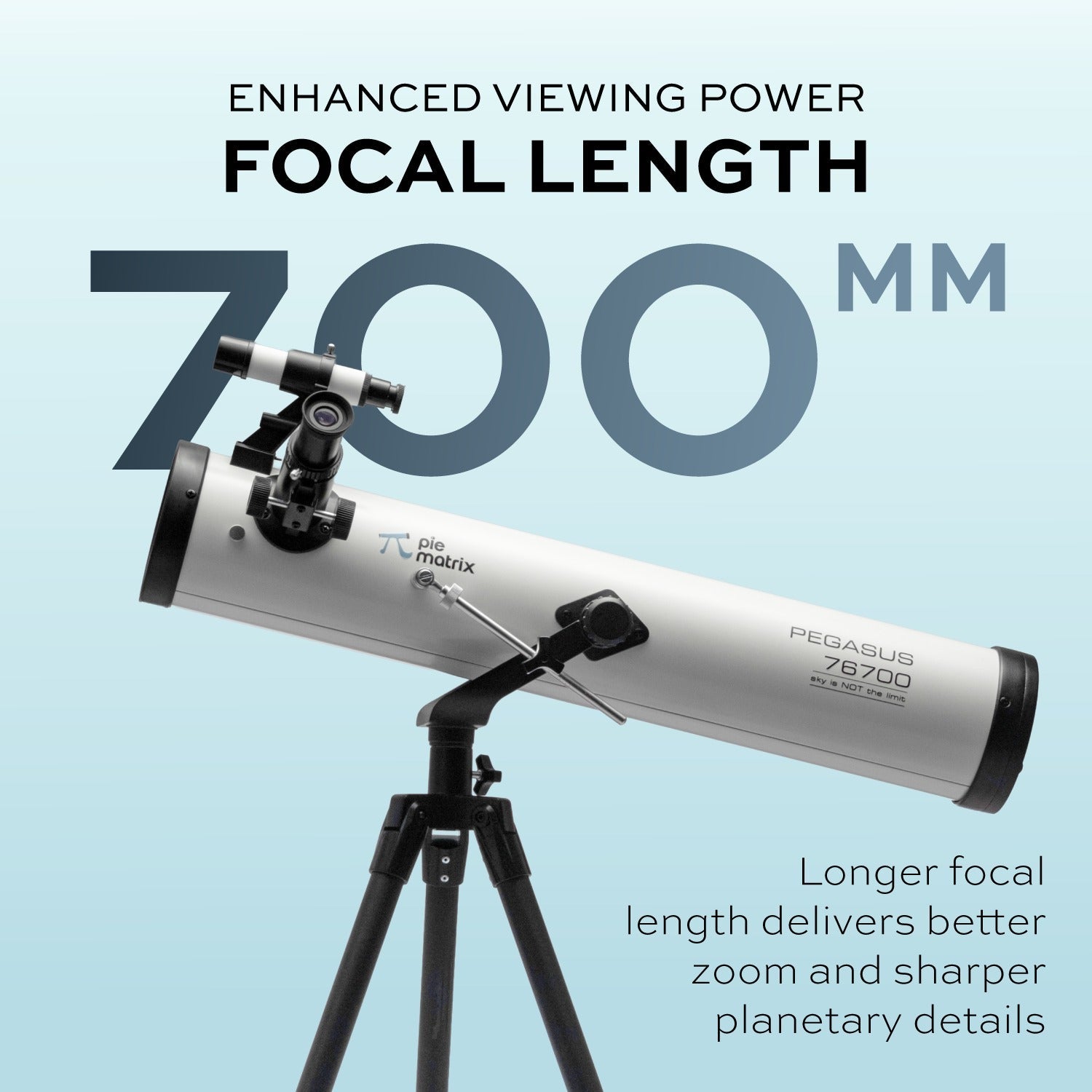
Pegasus 76700 Reflector Telescope

Sale priceRs. 12,999.00Regular price Rs. 16,999.00

Buy Reflector Telescope Online


What is Reflector Telescope

A reflector telescope is a type of optical telescope that uses one or two mirrors to magnify and produce images of distant objects. It features a primary mirror, which is concave in shape, and it is designed to capture light and focus on a smaller area."

The secondary mirror is placed at a 45-degree angle redirecting the focused light towards the eyepiece. This view is magnified and then presented to the observer for a detailed and clearer image quality.

Let us explore some more aspects of reflection telescopes and why they are advantageous for expert stargazers. 

Our Reflector Telescope Collections and their Benefits

Helix Reflector Telescope

With its sleek design and parabolic mirror with SIO2 coating and aluminised finishing, it enhances viewing. This is an important facility if you want to have a crystal clear view of celestial features. Additionally, the reflector telescope is also known to provide a magnification of 325X with Barlow.

Get the best resolution of 1.07 Arc Second within this reflector telescope price point and amplify your night-time viewing experience. One of the prime features of the Helix reflector telescope from Pie Matrix is lower Arc second and narrowband filters. Such a combination helps get a clear idea of the deep space subjects like Nebula and Andromeda effectively.

Buy Helix 130 EQ Reflector Telescope

Pegasus 76700

Pegasus Reflector Telescope 76700 is a Newtonian reflector telescope that is built for use by both professionals and beginners. Known to provide exceptional performance, it facilitates an Alt-Azimuth fork mount and a complete locking mechanism for exceptional deep space tracking. Additionally, it also comes with optical finderscope 5X24 which is a standard in providing high-quality images. With the SIO2 and Aluminised mirror, you can surely get crisp and bright images under any viewing conditions.

Buy Pegasus Telescope

How Can Reflector Telescopes Improve Your Experience?

Reflector telescopes are known to have a few advantages that make them unique for usage in stargazing. Some of them are as follows:

One of the important aspects of a reflector telescope is the usage of reflector mirrors in place of prisms or lenses. Therefore, you get zero lens-based chromatic aberrations and sharper truly defined images with original colour. In most of the cases, these telescopes are also known to use parabolic mirrors. Thus, it helps in proper image quality and clarity!

Reflector telescopes are also known to use mirrors rather than lenses, therefore, it does not dissipate light out of the system. Such a consideration helps you get clearer and brighter images as well. When the images are brighter and more light is focused on the eye-piece you can get a complete understanding of distant celestial bodies.

Another prime feature of reflector telescopes is their bigger aperture that facilitates greater capture of light. When more light is captured, even the low illuminating deep space celestial features are also properly visible. Additionally, parabolic mirrors are cheaper to be made in larger sizes than pieces of lenses.

Let us see some of the top reflector telescope categories available from the Pie Matrix down below.

Buy a quality reflector telescope from Pie Matrix and ensure that you get state-of-the-art technology and clearer images. Such telescopes are the perfect choice for both beginners and seasoned astrophotographers or deep space explorers.

FAQs

What can I observe through the Helix Reflector Telescope?
You can observe stunning views of both terrestrial and celestial objects through the Helix Refractor Telescope. From the Moon’s craters and Saturn’s rings to deep sky wonders like the Andromeda galaxy, Orion Nebula, and star clusters, you can have a clear view of many astronomical objects using the Helix 130 EQ.
Which astronomical telescope is best for Astrophotography?
For basic astrophotography, the Rigel Refractor is the best option because refractors offer the sharpest images, especially for the moon and the planets.
How much does an Astronomical Telescope Cost / Price?
The prices vary from ₹4,000 for the beginner models up to ₹60,000 for the larger types of telescopes, such as the Titan 8-inch.
What accessories are included with the telescope?
You get a complete kit: 25mm and 10mm eyepieces, a 3x Barlow lens for extra zoom, a red dot finder to help you aim, a Moon filter, and even a celestial calendar.
Is it suitable for astrophotography?
It supports basic astrophotography, especially with the included phone adapter, but it’s primarily built for visual observation.
Can we see planets using pegasus?
Yes, you can. With its 76mm aperture and up to 348x magnification, the Pegasus telescope allows you to see clear views of planets like Jupiter, Saturn, and Mars, along with lunar details and star clusters.
What is a reflector telescope?
Mirrors, not lenses and that's the short version. A reflector uses curved mirrors to gather and focus light, and because mirrors are cheaper to make big, you get way more light-collecting power for your money than you would with a refractor at the same price. Faint targets like galaxies and nebulae can be seen at its best.
What can I see with a reflector telescope?
Moon craters, easily. Saturn's rings, usually the moment people go quiet and just stare. Jupiter and its four big moons show up most clear nights. If positioned right enough, you may also get to see Mars, Venus, Star clusters and Nebulae. Andromeda too, if you're somewhere really dark and lucky.
What's the difference between a reflector and a refractor telescope?
Uses mirrors? It's a reflector. Uses glass lenses? It's a Refractor. Simple enough for you to understand. In reality reflectors win on aperture size for the same budget which is actually a big deal if you're after dim, distant astronomy. Refractors also hold their specifications for a sharper, higher-contrast view of the Moon and planets. So, choose as per your use.
Can I see Saturn's rings with a reflector telescope?
If you are lucky enough, then yes. You don't need a huge one either for this. Even a smaller, properly aligned reflector will show them clearly on a good night. Go bigger and Jupiter starts giving up more detail too including cloud bands, individual moons, and a wow factor.
Is a reflector telescope suitable for astrophotography?
Absolutely yes. Moon, planets, plenty of deep-sky targets. Just don't expect to bolt a camera out of the box. Depending on the shot, you will require a compatible camera, maybe an adapter, and a tracking mount for anything needing a longer exposure.
What aperture should I choose for a reflector telescope?
Depends on you. If you are new to this a 76mm can be a good starting point. If you already know you want more brighter views, fainter targets then don't skip on size.
Are reflector telescopes better for deep-sky observation?
Yes, because better aperture means to gather better light, and that's what is required to observe faint galaxies, nebulae, and clusters in the dark. Try it out for yourself at our Pie Matrix Experience Centre.
Can reflector telescopes be used for terrestrial viewing?
You can, technically, with the right gear pointed at a hillside. But, as a matter of fact, just know it's not built for that. Images mostly flip or come out upside-down, which is not what you must be looking for. For this, refractor works the best.

Pre-order item

product preview

Soft armchair

$420.00

Select variant

Select purchase option

Your pre-order item has reached its limit.