
Choosing your first telescope feels exciting right up until you start comparing and get a list of specifications. Aperture, focal length, mounts, eyepieces, price tags all over the map and suddenly you’re not sure where to even begin when choosing the best telescope for beginners in India.
Frankly speaking, you don’t need to spend a fortune or buy the most powerful scope on the shelf to start seeing something real in the night sky. What actually matters is what you want to observe, where you live, how often you’ll pull the telescope out and what you’re willing to spend. Here, you will find what beginners in India should consider before buying the best telescope for beginners in India.
What Should Beginners Look for in a Telescope
See, everyone does good marketing but if you skip the marketing copy for a second and compare models, you will get to know which specifications affect your observing experience. The factors that matter most when choosing the best telescope for beginners in India are:
-
Aperture - Determines how much light the telescope can collect
-
Telescope - Refractors, reflectors, and dobsonians have different strengths
-
Mount - A stable mount makes finding and tracking objects easier
-
Focal length - Influences the telescope’s field of view and magnification
-
Portability - A telescope that’s easy to carry, is more likely to be used
-
Budget - As a beginner, you need optical performance without unnecessary features
Good optics, a stable mount and something easy enough to set up on a Tuesday night. That’s exactly what beginners should actually chase when choosing the best telescope for beginners in India.
Which Telescope Type Is Best for Beginners
Most people who choose their first telescope get confused between three designs, refractors, reflectors, and Dobsonians. Well, each one handles light differently and that difference matters more than you’d think once you’re standing outside at 9 PM trying to find Saturn.
|
Telescope Type |
Best For |
Main Advantage |
Beginner Friendly |
|
Refractor |
Moon & planets |
Simple & low maintenance |
Yes |
|
Reflector |
Planets & deep sky objects |
Good light gathering ability |
Yes |
|
Dobsonian |
Deep-sky & general sky gazing |
Large aperture & simple operation |
Yes |
Refractor Telescopes
Refractors use lenses to bend and focus light. Setup is quick, little maintenance and they hold their alignment well over time. That reliability is why they’re such a common first pick. Point one at the Moon on a clear night and the observation is amazing. Pie Matrix currently sells three refractor models: the Neo, the Phoenix and the Rigel, making them worth considering when looking for the best telescope for beginners in India.
Reflector Telescopes
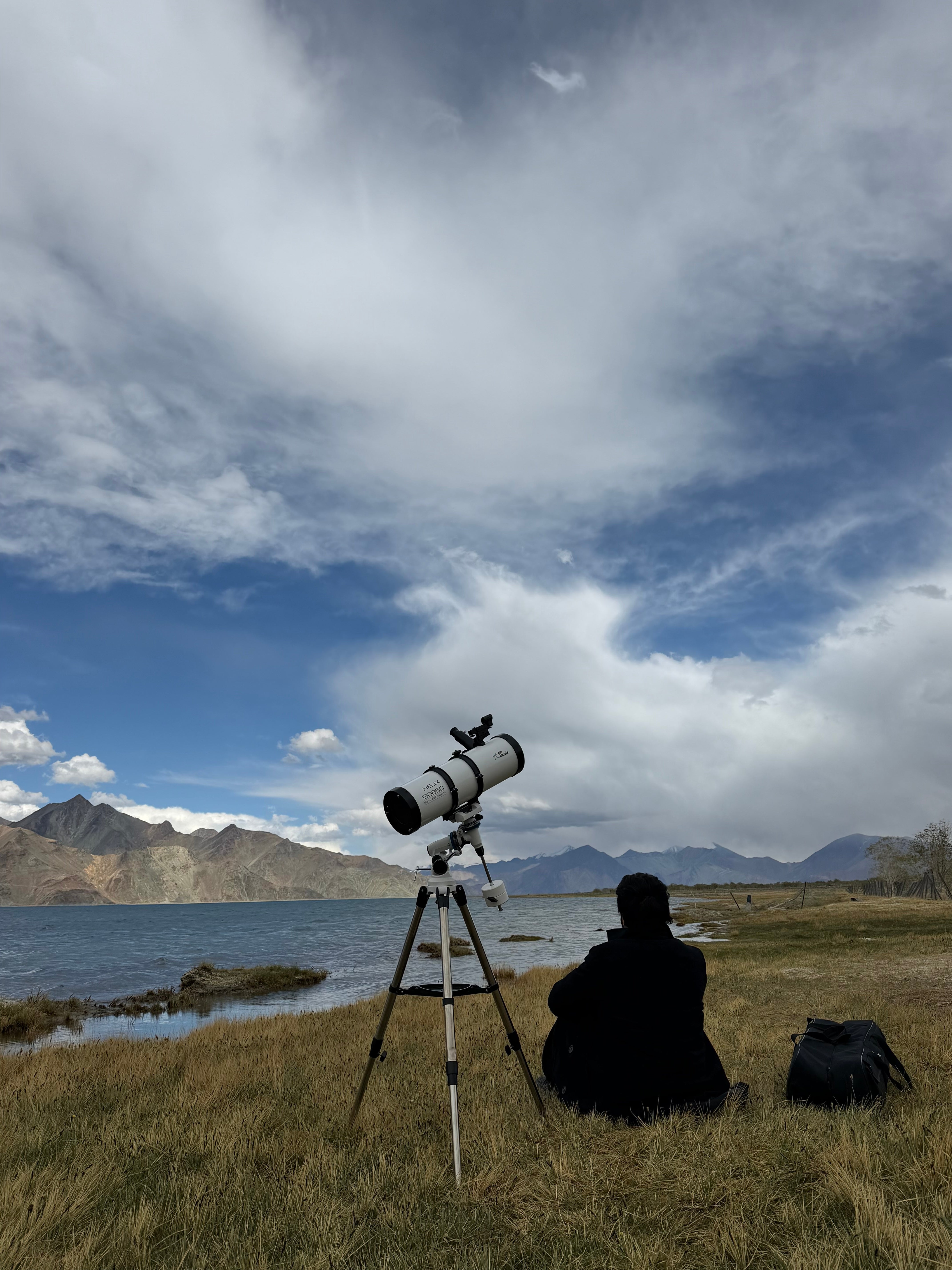
Swap the lenses for mirrors and you’ve got a reflector. It provides a larger aperture for the money. Reflectors typically gather more light than a comparable refractor, which opens up fainter targets like nebulae and star clusters, not just planets. Pie Matrix’s reflector lineup includes the Pegasus, the Draco, and the Helix.
Dobsonian Telescopes
A Dobsonian is really just a Newtonian reflector paired with a simple alt-azimuth mount. What makes it stand out is the aperture, operation and relatively simple mounting. That’s a big deal if you’re chasing dimmer deep-sky objects. Pie Matrix offers Dobsonians in tabletop, 6-inch, and 8-inch sizes.
How Much Aperture and Magnification Does a Beginner Need
Aperture’s just the diameter of your telescope’s main lens or mirror, nothing more complicated than that. Bigger aperture, more light in, and that’s what lets you start picking out fainter stars and finer detail. The starting size of 70mm to 100mm works well in the beginning though.
Magnification depends on the focal length and the eyepiece you’re using. A range of 50x to 150x could be ideal for a beginner. Higher magnification is used rarely on clear nights as if the magnification is too high, the image gets dimmer and blurrier.
What Can You See With a Beginner Telescope
So what does your money actually buy you, view-wise? That’s the real question before you check out when choosing the best telescope for beginners in India.
The location matters more than most people expect. City skies wash a lot of that out. Get out to a dark rural spot, though and suddenly there’s a lot more up there to find.
Here’s what beginners typically get a look at:
-
The Moon and its craters
-
Jupiter and its brighter moons
-
Saturn and its rings
-
Venus and its phases
-
Bright star clusters
-
The Orion Nebula
-
Some brighter galaxies and deep-sky objects
How to Choose the Best Telescope for Beginners in India
Bigger isn’t always better here. The right telescope comes down to what you actually plan to look at.
1. Mainly the Moon and planets?
Go with a refractor. Simple design, sharp views of bright targets, hard to get wrong as a first telescope.
2. Want something flexible?
A reflector gives you more aperture for your money, a decent middle ground for someone still figuring out what they like.
3. Are deep-sky objects the goal?
Look at a Dobsonian. Big aperture, built for exactly this kind of viewing.
4. Setup and portability matter more than anything?
Get something small and light. A telescope that’s a pain to carry outside just ends up sitting in a closet and that’s the real waste of money.
Pie Matrix usually points beginners toward its Neo and Phoenix refractors. Want something else? The catalog covers reflectors and Dobsonians too.
How Much Should You Spend on a Beginner Telescope in India
Honestly, it comes down to how far you actually plan to take this hobby.
|
Budget Level |
Suitable For |
What to Prioritize |
|
Entry level |
Casual stargazing & moon viewing |
Ease of use & basic optics |
|
Mid range stability |
Regular astronomy |
Better aperture & stability |
|
Higher range |
Serious enthusiasts |
Larger aperture, advanced features or specialized use |
Right now Pie Matrix stocks everything from basic refractors for first-timers up to bigger Dobsonians and more advanced rigs. Plenty of room to grow into, whatever your budget looks like.
Common Telescope-Buying Mistakes to Avoid
A basic telescope you use every week beats an expensive one collecting dust. Watch out for these before you buy:
-
Chasing max magnification over aperture
-
Ignoring aperture, it’s what really matters
-
Going cheap on the mount
-
Buying something too bulky to bother setting up
-
Expecting NASA-quality photos from a beginner scope
-
Stocking up on accessories before you know what you need
-
Skipping a check on local light pollution
Ready to Buy your First Telescope?
Your first telescope should match how you actually want to stargaze and for that aperture, type, mount, portability, budget, it all matters.
Want quick, sharp views of the Moon and planets? A refractor does the job. Need more light-gathering muscle? Go with a reflector. Want serious aperture without a complicated setup? Dobsonians are the beginner's favorite. Pie Matrix carries all three, so you’re not stuck guessing when choosing the best telescope for beginners in India.
Best advice, though don’t just read about them. Walk into a Pie Matrix Experience Centre, look through a refractor, a reflector, and a Dob side by side and let your own eyes pick the winner. That’s the fastest way to find the telescope you’ll actually use and not just the one that sounded good online.
Share:
Astronomical Events in January 2026