
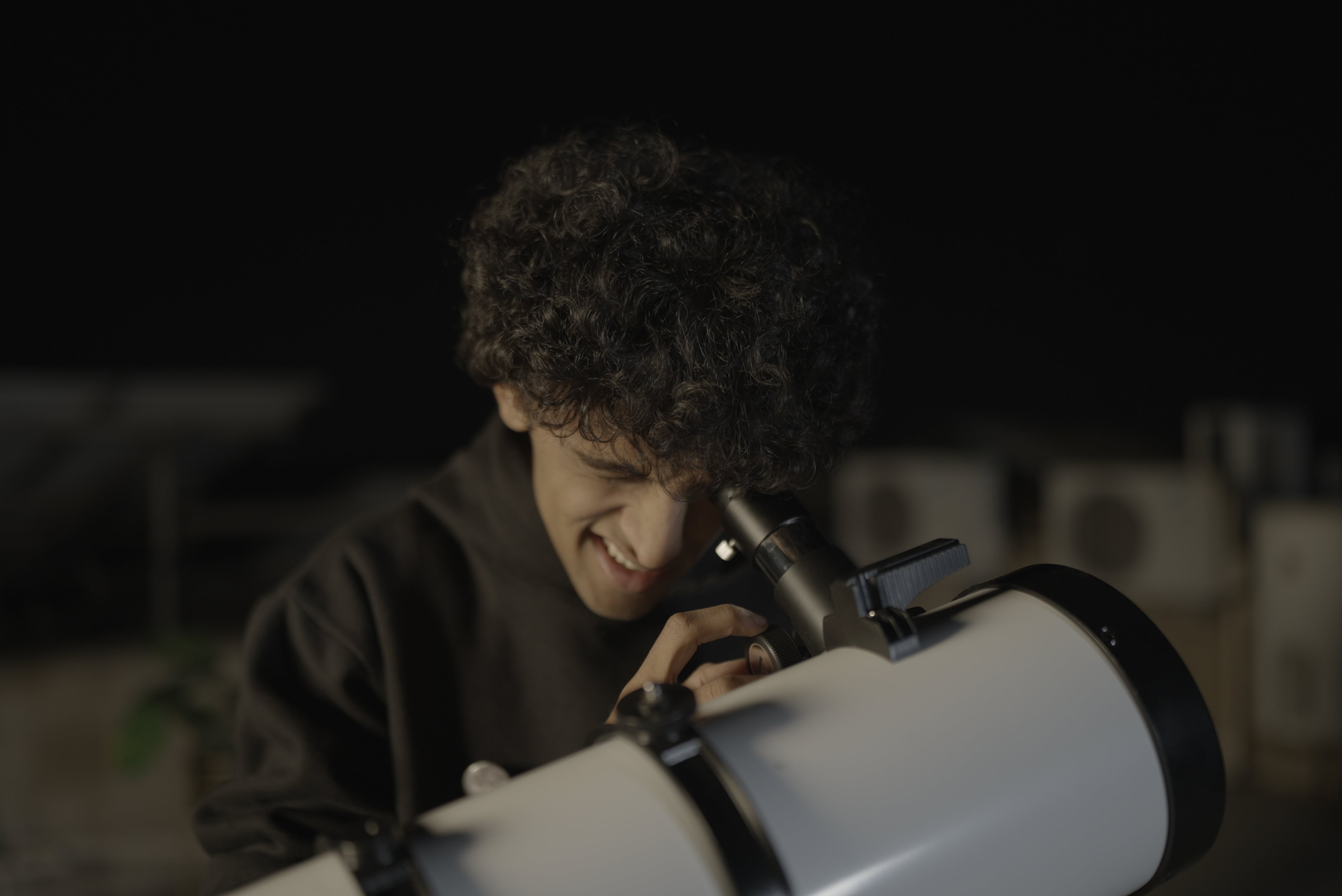
Understand the key features before buying your first telescope, including focal length, aperture, and mount type, which Ever stared at the night sky and wished to zoom past familiar stars to uncover glowing nebulae and hidden galaxies? Welcome to 2026, your first Astronomical telescope is calling you. Say goodbye to naked-eye limits and start epic cosmic adventures.
The Pie Matrix offers excellent telescopes for astronomers, beginners, and pro users with a perfect balance of functionality and quality. However, which type of telescope will spark your stargazing obsession? It is quite confusing to choose your first Astronomical telescope – reflector power or refractor grip affect stability, image quality, and magnification.
What are the Types of Telescopes Available to Pick the Best in 2026?
1. Refractor Telescopes
These are perfect for beginners and planetary enthusiasts. These telescopes use lenses to give you crystal-clear, high-contrast views of planets and stars. You will love the sharp, detailed images they deliver.
2. Reflector Telescopes
If you want to start your career in deep-sky exploration, reflector telescope are your best bet. They offer stunning clarity and detail, making them ideal for exploring distant galaxies and nebulae.
3. Cassegrain Telescopes
Compact yet powerful. These telescopes combine mirrors and lenses for outstanding astrophotography and detailed observations. This is the best telescope for astrophotography when space is limited, but you still want impressive views.
4. Dobsonians
With large apertures and simple designs, these telescopes are perfect for deep-sky exploration. Dobsonian Telescope gather loads of light, making faint celestial objects shine bright.
At Pie Matrix, we have made it easy for our customers to find their perfect telescope and binoculars. Browse our collections, compare features, and get astrophotography, stargazing or a professional one – whether you have just started or are a pro!
How to Choose the Best Astronomical Telescope in 2026?
The Pie Matrix guides you through the process, focusing on quality optics, durability, and ease of use before any. Our experts help you find the best telescope for astrophotography that fits your budget.
1. Aperture
The most important aspect of any telescope is its aperture, the diameter of its main optical component, which can be either a lens or a mirror. A scope's aperture determines both its light-gathering ability (how bright the image appears) and its resolving power (how sharp the image appears).
Any larger aperture offers cleaner and brighter images when viewing distant celestial objects.
2. Magnification
For beginners, it is a common question: how much does the telescope magnify? The answer to their question is any amount they want. Telescopes provide magnifications in an infinite range, depending on the eyepieces that the buyer uses with it.
Any telescope with the right balance of focal length and aperture ensures clear views. You can enjoy clear and crisp images without sacrificing quality.
3. Focal Length
After knowing the range of useful magnifications in a telescope, the question is, how do you get them? Do the little numbers on the telescope eyepieces reflect magnification details?
Every telescope has a particular focal length that effectively measures the distance from the image it forms to the mirror or lens. A longer focal length provides greater magnification. It is ideal for capturing planetary images and detailed objects in the dark sky.
4. Mount Type
The best telescope for astrophotography is useless until it is on a smoothly working and stable mount. Do you know what makes you unable to focus a scope and follow any celestial object precisely and smoothly, since the Earth is rotating and your target is moving?
A mount in the telescope controls the movement. There are equatorial and altazimuth mounts. Both of these types mount track celestial objects (left, right, up, down) across the sky. At Pie Matrix, we offer equatorial mounts for advanced astronomers to track the movement of the planets and sky.
Why Quality Optics are Crucial for Astronomical Captures?
Quality optics are necessary for sharp, clear images of celestial bodies. High-quality mirrors and lenses make all the difference, eliminating issues like chromatic aberration and distortion. At Pie Matrix, our experts design telescopes with precision-engineered optics to ensure you get the best views possible.
We want your stargazing experience to be spot on, right from the start. Whether you are checking out galaxies, planets, or just exploring the night sky, quality optics bring out the tiny details and make the universe come alive!
Score Your First Astronomical Telescope
Choosing the best Astronomical telescope is not just about the price tag. You have to research the specifications before buying an Astronomical telescope for your stargazing adventures.
Telescopes come in all shapes and sizes, with varying designs and performance levels. Whether you are just a beginner or a seasoned astronomer, getting the right telescopes means you will get more out of your night sky explorations.
Share:
Refractor vs. Reflector telescope: Which One Actually Wins for Deep-Sky Viewing?
Refractor Telescope: A Comprehensive Guide